
Okay, so check this out—I’ve been noodling on browser wallets a lot lately. Whoa! They’re convenient. But they’re also the easiest vector for mistakes that cost real money. My instinct said “there’s room for better UX and smarter safety” and Rabby caught my eye for that reason.
At first glance Rabby looks familiar. Seriously? It behaves like other EVM-compatible extension wallets—accounts, network switching, and dApp connections. Initially I thought it was just another wallet, but then I noticed a few design choices that felt more security-first than some rivals. On one hand the UI stayed simple; on the other hand small safeguards were added that make you pause before blindly approving risky transactions. Actually, wait—let me rephrase that: it nudges you toward safer choices without feeling like a lecture.
Here’s what bugs me about browser wallets in general. Approvals are messy. Many users grant unlimited token approvals and never revoke them. Hmm… that pattern keeps coming up in incident reports. Rabby tries to address approval fatigue with clearer prompts and a focus on per-dApp permissions, which I like. My experience with it made me more cautious, which is a win even if it slows me down a bit.
Quick reality check: no wallet is a silver bullet. I’m biased, sure—I’ve spent hours testing extensions in my browser. But the practical truth is that user habits matter more than features alone. Something felt off about how casually people treat seed phrases, and any extension that helps slow down bad habits is welcome. (Oh, and by the way… I still keep a hardware wallet for big holdings.)
What Rabby Does Differently — Practical Notes from Using It
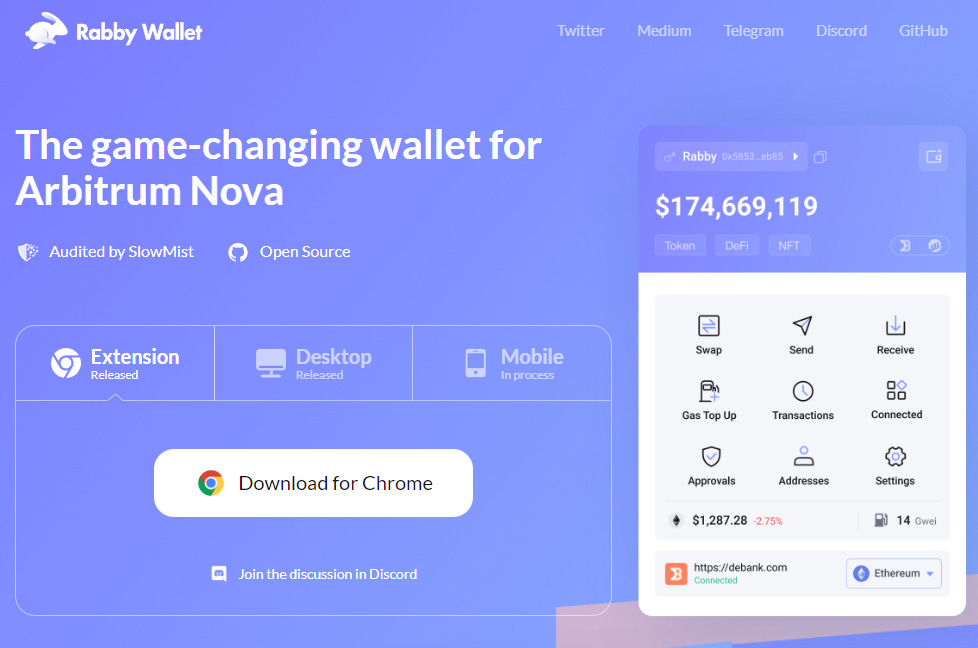
Rabby focuses on the browser extension flow and adds a few modest but meaningful improvements. It separates dApp approvals more explicitly, and shows clearer transaction details so you can see where your gas and tokens are going. Wow! The wallet also supports multiple accounts and integrates with hardware devices, which is handy for layered security. On the technical side it’s aimed at EVM chains, so if you live mostly in Ethereum, BSC, or similar networks, it’ll feel native.
I like the way it surfaces risks. Rather than burying approval scopes in tiny text, Rabby tries to summarize them. My gut reaction was “finally”—because reading that tiny approval text in other wallets is a chore. There’s also often an option to customize gas and to see contract addresses, which helps when you want to double-check a transaction before you hit confirm. Though actually, confirmation dialogs can still be glossed over by tired users, so it’s not a fix-all.
Security practices matter more than bells and whistles. Use a hardware wallet for significant amounts. Keep your seed phrase offline. Enable auto-lock and set a strong password. I’m not 100% sure everyone will do this—honestly most people won’t—but the tools that make these steps easy have higher adoption rates. Rabby makes some choices that reduce friction for those safe habits, even as it preserves convenience.
Downloading the extension deserves a moment of attention. If you want to get Rabby, get it from the official source to avoid phishing clones; some extensions impersonate reputable wallets. For convenience, you can start the official download process here. Seriously—one wrong click and you could be trading convenience for compromised keys, so pause and verify the extension publisher in the store before installing.
Now, a short walkthrough from my testing runs. Install from the official store or the provider’s site, create or import an account, and then try connecting to a small-value dApp to get comfortable. Wow! That little sandbox approach saved me from a couple of sloppy approvals. Use the wallet’s settings to check permitted sites and revoke anything suspicious. Also, enable any available transaction confirmation helpers and review the raw data if you know how—it’s educational and useful.
Common Questions and Practical Tips
Who should consider Rabby? If you use browser-based dApps frequently and want fine-grained control over approvals, it’s worth a look. If you manage multiple accounts or integrate a hardware wallet, Rabby can streamline those flows. On the flip side, if you’re strictly mobile-first or need non-EVM support, you might look elsewhere or layer Rabby with other tools.
What about privacy and open-source? Rabby has public codebases and community discussions, which helps with transparency. That said, open-source status alone doesn’t guarantee safety—review activity and community audits when possible. My working rule: favor active projects with community scrutiny and recent updates.
Keep an eye on extension permissions. Extensions that request broad browser access are higher risk. I always check what permissions an extension requests and cross-check them against what I expect the wallet to need. If something looks off, uninstall and re-evaluate. Repeat offenders or suspicious updates should be treated like red flags.
FAQ
Is Rabby wallet safe for everyday DeFi use?
Safe is relative. For small to moderate amounts it provides sensible protections and a cleaner approval model than some alternatives. For large sums, combine Rabby with a hardware wallet and strict operational practices. Always verify contract addresses and never paste your seed phrase into a website.
Can I use Rabby with Ledger or other hardware wallets?
Yes, Rabby supports hardware wallet integration, which is a recommended layer of defense. Use the hardware device for signing sensitive transactions and keep most tokens cold if you can. The combined setup reduces risk significantly compared to a software-only flow.
What are the biggest pitfalls when using any browser wallet?
Phishing, over-granting approvals, and negligent key handling are the top issues. Slow down when approving things, inspect contract details, and minimize exposure by keeping most funds off hot wallets. If something smells like a scam, it probably is—trust that gut feeling and double-check.
